

 Kumar Lama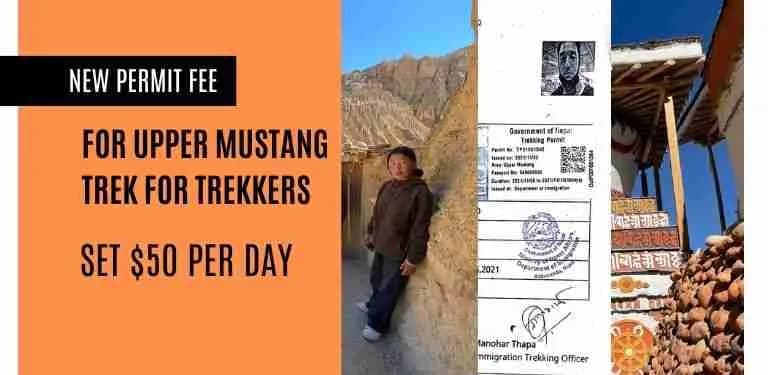
To shake things up and attract more tourists, the government has made the bold decision to scrap the $500 flat fee per person for a 10-day visit to the Upper Mustang region. Travelers will still need a Mustang permit to explore this beautiful area. However, the Mustang permit price has significantly decreased. This area, nestled near the Tibet border between Nepal and China, is restricted. This price has been in place for decades. Once the regulations are effective, the new fee will be a more reasonable $50 per person, per day.
Trekking agencies are appreciating this as a great start and are hopeful that other restrictions – both on permit costs and entry – will begin to ease as well.

Minister of Communications and Information Technology and government spokesperson, Jagadish Kharel, revealed the decisions of the Cabinet meeting on Tuesday. He clearly stated that the authorities will implement changes by amending the Immigration Regulations. Under the new rule, trekkers will only pay for the days they actually spend in the region. This makes Upper Mustang a much more attractive destination for those with shorter itineraries.
Currently, trekking in the restricted areas of Upper Dolpo and Upper Mustang costs $500 per person for the first ten days, and $50 per person per day thereafter, according to the Department of Immigration.
The Trekking Agencies Association of Nepal is elated with the decision, saying it has been lobbying the government to facilitate the removal of the restrictions. “But of course, we do think there should be some restrictions in place. We don’t want to see the kind of overtourism that can damage the delicate ecosystem of one of the world’s most incredible places,” said Sagar Pandey, president of TAAN.
“We’ve also been asking for similar easing in other areas like Upper Dolpa. It’s all about finding a balance between tourism and conservation.”

Meanwhile, TAAN has also asked the government to remove the provision requiring a permit to travel in groups of more than two people. “To be honest, it’s hard to see any sense in it. Why can’t a single foreign trekker visit these restricted areas?
“Our suggestion doesn’t mean we think foreign trekkers should be allowed to wander freely in these areas. They will need to trek with a guide, which is mandatory in all trekking areas,” Pandey argued.
There are dozens of trekking areas in Nepal that are completely unrestricted. Still, certain areas are designated as “restricted areas” and are subject to strict rules. In these areas, free, independent trekkers are not allowed.
Taplejung, Sankhuwasabha, Solukhumbu, Dolakha, Rasuwa, Gorkha, Upper Mustang, Manang, Upper Dolpo, Lower Dolpo, Mugu, Humla, Bajhang, and Darchula districts, which border Tibet, were all declared off-limits to foreign visitors back in the 1970s.
In the 1970s, the government restricted the movement of foreigners in many northern villages along the Tibetan border. This was because Tibetan rebels who opposed Chinese rule were using the Nepali territory to launch raids into China. Although the Nepali Army managed to disarm the rebels in 1974, the travel restrictions stayed in place.
Nepal’s official history of trekking began in 1949, when the country started opening up to the outside world after centuries of isolation.
The first commercial trek in Nepal was organized by British diplomat and mountaineer Lieutenant Colonel James Owen Merion Roberts in 1950.
Trekking agencies have been pushing the government to open these areas. They say these regions have massive potential to uplift Nepal tourism and the local economy.
To visit these areas, you need a special permit from the Department of Immigration. And to get a permit, you need to be part of a group travelling with a government-authorised trekking agency.

Permit prices vary wildly, from $20 per week to $500 for 10 days, depending on the location. Some of the charges are much more expensive.
Here are some examples of the previous fee structure:
| Destinations | Permit Cost | Extras |
| Upper Mustang & Upper Dolpa: | $500 for the first 10 days. | $50 per day thereafter. |
| Manaslu, Manang, Mugu (Autumn): | $100/week. | $15 per day thereafter. |
| Manaslu, Manang, Mugu (Off-season): | $75/week. | $10 per day. |
| Bajhang & Darchula: | $90/week. | $15 per day. |
| Humla Limi Valley: | $50 per week. | $10 per day thereafter. |
| Tsum Valley (Gorkha): | $40 for 8 days in autumn. | $30 for 8 days off-season. |
| Taplejung, Lower Dolpa, Dolakha, Sankhuwasabha: | $20 per week. |
There are many reasons to trek to Upper Mustang, but you were not able to visit.
Take a look at our tailor-made Upper Mustang Trek itineraries – these typically last anywhere between 7-18 days, which means you can pick the one that really fits your schedule & style.

The major villages and places of the Mustang region are accessible by the road up to the Korala border between Nepal and China. Due to this road access, visitors can travel easily.
The trekkers who want to visit on foot will still need to obtain 10-day permits or more, depending on the duration of their trek within the restricted zone.
Whichever the adventure you choose, please read this guide to the Upper Mustang trek to help you plan your journey with ease.
Tourism is a fundamental part of Nepal’s economic structure. Its contribution to foreign exchange generates jobs, and, in turn, all sorts of development take place across the country. In 2023, the tourism sector added a staggering Rs 327.9 billion to the nation’s kitty and employed a whopping 1.19 million people.
In 2024, Nepal welcomed 1.14 million tourists coming into the country. Of these, 166,394 chose to undertake treks of varying difficulty across the country.
According to official statistics, areas that have historically been off-limits to tourists got 28,894 foreign trekkers. Mostly, they headed for Manaslu and Upper Mustang.
With its breathtaking peaks and lush valleys, Nepal captures the imagination of wanderers globally. But is Nepal safe to travel to, or how safe is it to travel there? This question is common among potential travelers. The good news is, with suitable precautions, Nepal is a safe and enjoyable destination. From avoiding common scams to
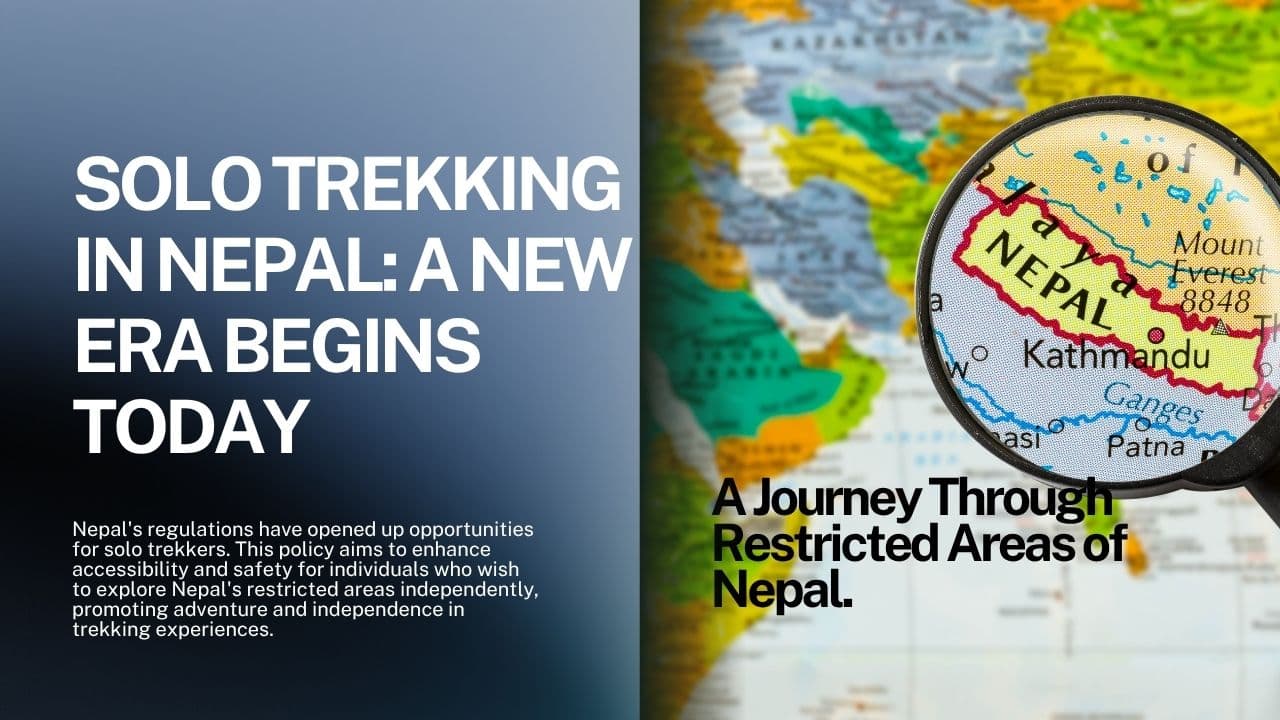
Nepal has some restricted areas in the Himalayas that border Tibet. It stretches from the East to the West, covering 13 districts in total. Trekking in these designated areas requires a trekking permit. A group of two or more trekkers must apply for the permit. The Government of Nepal has made significant changes to the
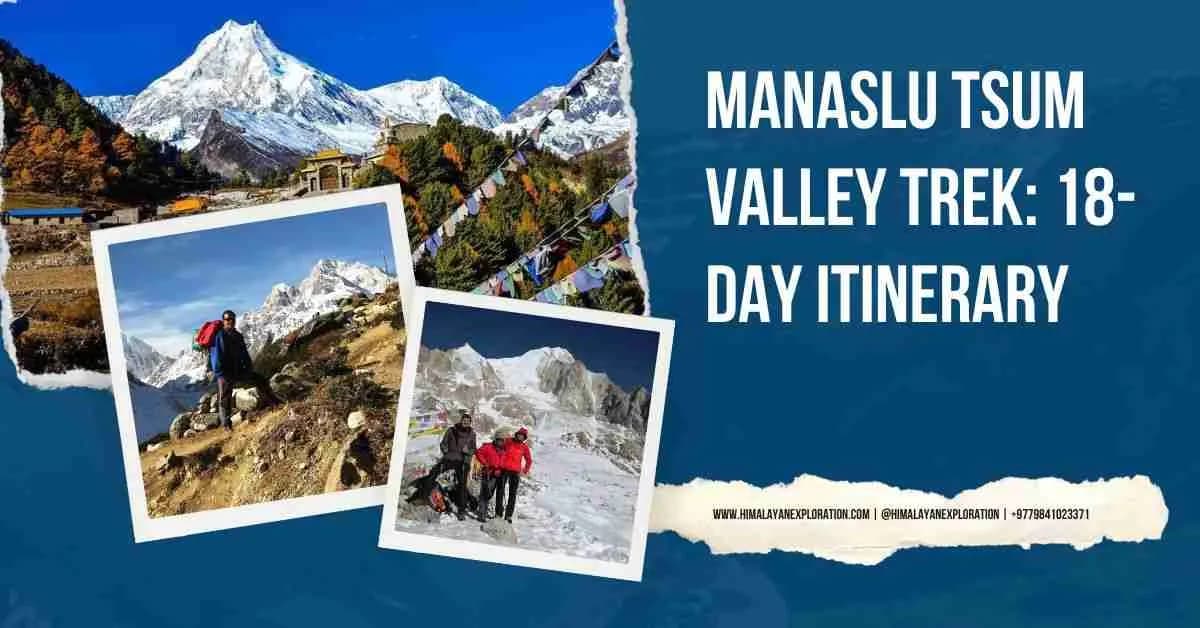
The Manaslu Tsum Valley Trek is an excellent blend of nature and culture in one of Nepal’s most stunning regions. You will see stunning mountains and challenging trails, and learn about local culture. The trek starts from Machha Khola and follows the Budhi Gandaki River through tropical forests to alpine meadows. As you trek in