





 Kumar Lama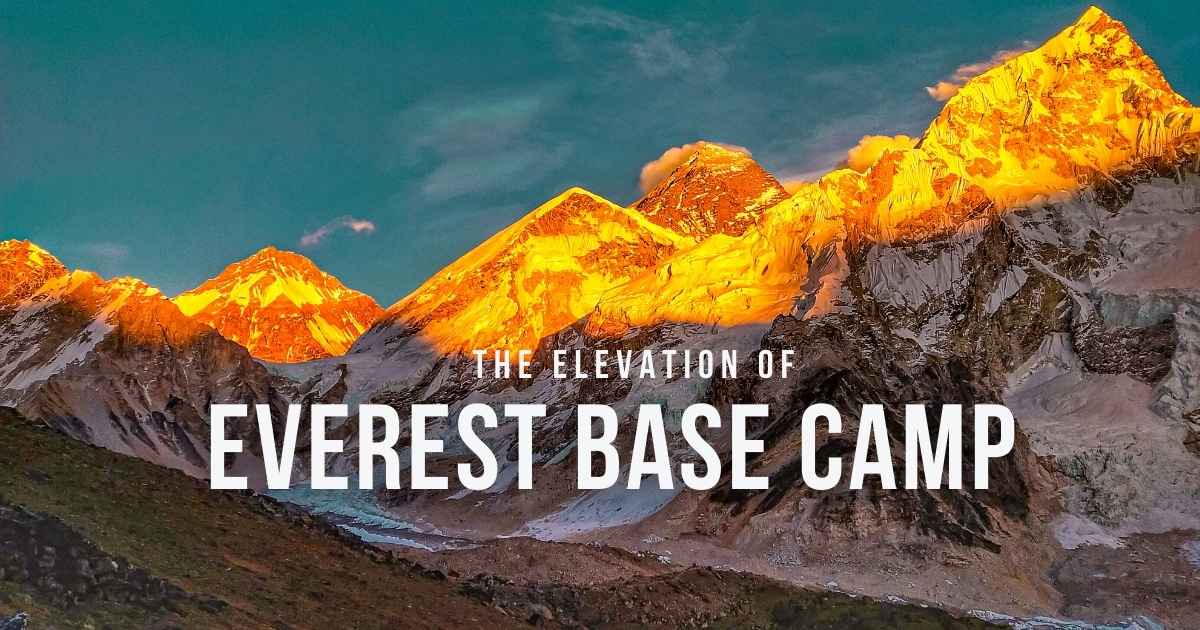
When you hear the name of Mount Everest, you suddenly think of its base camps or the summit of the tallest mountain on Earth. For mountain climbers and trekkers, it is a significant milestone. You will gain the elevation to get to Everest Base Camp (EBC). It is that crucial stopover that gets you halfway to the summit. Moreover, with a breathtaking elevation that’s as awe-inspiring as it is intimidating, you’ll have to be ready for both the thrill and the challenge of reaching this lofty location.
Himalayan Exploration Treks takes the mystery out of the Everest Base Camp elevation. We all want to know about the exact height of Everest Base Camp. And what exactly is it about this altitude that makes it such a big deal for trekkers and climbers? Here’s what you need to know about the Everest Base Camp trek for a successful, enjoyable adventure.
Around 40,000 trekkers make the journey to Everest Base Camp each year. It is one of the most bucket-list trekking routes on the planet.

Mount Everest Base Camp is not only a geographical location. It is also an origin of adventure and determination. On the north and south faces of the mountain, in Nepal and China, you’ll find two of them. And it’s these places that serve as vital camps for anyone attempting to climb Everest.
There are two main base camps on opposite sides of the highest mountain in the world:
You’ll find the South Base Camp perched on the Khumbu Glacier. At the same time, the North Base Camp is nestled near Rongbuk monastery in Tibet, China.
This article is going to concentrate on the South Base Camp – that classic Everest Base Camp trek route. This is where Himalayan Exploration Treks come into their own, specialising in that very trek.

The official height of Everest Base Camp is 5364 metres (17,598 feet) above sea level. That’s a mind-boggling 5 kilometres or more, right out of the ordinary. It is perched on the edge of some of the most incredible and awe-inspiring mountains on Earth. You can put that height into perspective by thinking about how far you’d be climbing. Starting from Lukla to Everest Base Camp, it’s a whopping 2,524 metres (8,280 feet). That’s more than half the highest peak in the world.
It’s the gain in altitude during this trek that makes all the difference – and not just from a logistical perspective. The climb, as challenging as it is, requires trekkers to take their acclimatization & training seriously. Let alone the risks involved in high-altitude trekking. The harder you push, the more this altitude gain affects both your physical performance and your overall trekking experience. What’s key here is that this base camp, nestled so high up in the Himalayas, puts you in an environment that’s both thin on oxygen and prone to extreme weather.
Getting to grips with the Everest Base Camp elevation is essential because it makes all the difference to the trek itself. You see, the higher you climb, the greater the risk of altitude sickness. You need to worry about acclimatization and the physical difficulty of the journey.

A trek to Everest Base Camp kicks off with an absolute thrill of a flight from Kathmandu or Manthali Airport into Lukla. This tiny airport – officially Tenzing-Hillary Airport – is perched at 2,840 metres, and landing there is a real thrill: a short runway and stunning mountains all around you. Therefore, every landing feels like an adventure.
From Lukla, the journey begins with gentle elevation as the trail winds up at a slow, steady pace, taking you through the lovely Khumbu region. As you make your way along the trail, you pass through some of the quaint Sherpa villages. You also pass through some really comfortable tea houses and suspension bridges, which take you over the Dudh Koshi River.
Many trekkers head for Kala Patthar as they make their way toward the Everest Base Camp. Kala Patthar is the highest viewpoint you’ll find in the area. It is a peak that, surprisingly enough, only reaches 5,644 metres (18,519 feet).
The views from Kala Patthar of Mount Everest and the surrounding mountains are, without a doubt, the best you’ll get this side of the Himalayas. Its breathtaking scenery has even made it into National Geographic. You might have seen it in one of their documentaries or a photo spread. This makes Kala Patthar a definite must-see on your trek.
Reaching high altitudes like Everest Base Camp without a plan to handle thinner air can be dangerous. Above 3,000 meters, there is too little oxygen. Your body needs time to adjust. The acclimatization process helps your body adapt.
You can do this by adding extra days for acclimatization or by staying at higher camps longer. Do it properly or not at all. Altitude sickness is a serious threat. It’s not just a headache. It can be life-threatening. Proper pacing and staying hydrated reduce the risk of severe conditions like HAPE and HACE.

The Everest Base Camp sits on the Khumbu Glacier, which is probably the highest glacier on the planet. It adds to the unique landscapes and challenges of the trek. You get to see the icy terrain and deep crevasses from Base Camp, which provides a stunning backdrop for the whole expedition. Not too far away, the Khumbu Icefall is a pretty significant feature on the route – a massive amount of ice towers that are always shifting and deep crevasses that make it really tough, especially for the climbers when they’re trying to make it to the top of Mount Everest.
The trek takes you right through Sagarmatha National Park, a UNESCO World Heritage Site. It is rich in biodiversity and a naturally beautiful place to visit in Nepal, ranging from 2,845 meters all the way up to the very top of Everest at 8,848 meters. Because of that, it has a wide range of ecosystems, including forests and alpine tundra.
The trek involves a mix of steep climbs with some gentle slopes and the descents along rugged mountain trails. You’ll cross suspension bridges, climb stone stairways, and not always get the most even ground. But the route is mapped out to help you acclimate to the altitude and reduce your risk of illness.
Along the way, you’ll be staying in tea houses, but a bit more rustic. The tea houses are good places to get rest, eat, and sleep. Some of them are well-equipped with modern amenities. And it’s a great time to experience some of the Sherpa culture for real, try some local cuisine, and get a feel for how the people live around here.
The temperature does a funny thing: you get warm days and then very cold nights, especially higher up. If you’re planning on trekking the Everest region, the dry months of March to May and September to November are probably the best. But in the winter, it’s full on cold and snowy, and don’t even think about the monsoon – it’s heavy rainfall and slippy trails all the time.
Reaching Everest Base Camp is not just a physical challenge; it is an emotional journey. Standing at the foot of the world’s highest mountain, surrounded by the majestic Khumbu Glacier and towering peaks, you cannot help but feel a deep sense of accomplishment and awe.
The trek is also a unique chance to be immersed in the Sherpa way of life, to see the monasteries, and the way of life in this beautiful region. You get to witness Buddhist rituals and meet locals who are not only resilient but also hospitable, making you feel like you’re one of the family.
The classic Everest Base Camp trek usually takes 14 to 16 days, giving you plenty of time to acclimatise and soak up the scenery. Find out that the 5 best itineraries are pretty standard but do include a few welcome surprises:
Note: For those looking to climb above base camp, the route passes several high-altitude camps. Camp II, also known as Advanced Base Camp, is located at the base of the Lhotse Face at 6400 meters. At 7200 meters lies the Camp III, which is the halfway point, and a difficult place to reach. Camp IV, also known as the South Col, is located at the base of the final push at an altitude of 7920 meters before you head towards the summit.
The area above Camp IV is known as the ‘death zone’ due the its low oxygen levels and the risks they entail. And then you’re into the summit push, the final and most challenging part of the climb. It’s a big ask, requiring careful planning and acclimatization to get there safely.
The Everest Base Camp sits at 5,364 metres. It’s a bucket-list experience for many trekkers. Base Camp is more than a landmark. It is at the foot of the world’s tallest mountain. The trek there is tough. It pushes your body and mind. It shows how small you are compared to the mountain. Still, it’s a trip that will blow you away. The scenery and culture are unforgettable. Who wouldn’t want to see the Himalayas up close?
As you head to base camp, the adventure feels exciting. With some planning and acclimatization, it’s within reach. Experts like Himalayan Exploration Treks can help. Reaching base camp is possible for most adventure-seekers. Your goal might be to climb Everest, or to see the scale of the Himalayas. Either way, the trek to Everest Base Camp should be on your list.
Ready to hit the trails? Contact Himalayan Exploration Treks. They will help you reach Everest Base Camp safely. It’s the gateway to the world’s highest mountain.
If you are planning to trek to Everest Base Camp, proper preparation is the best way to ensure a safe and successful trek. An Everest Base Camp guide can help answer many of the questions that often pop into your mind. This happens whether you are a first-time trekker or an experienced adventurer. The questions
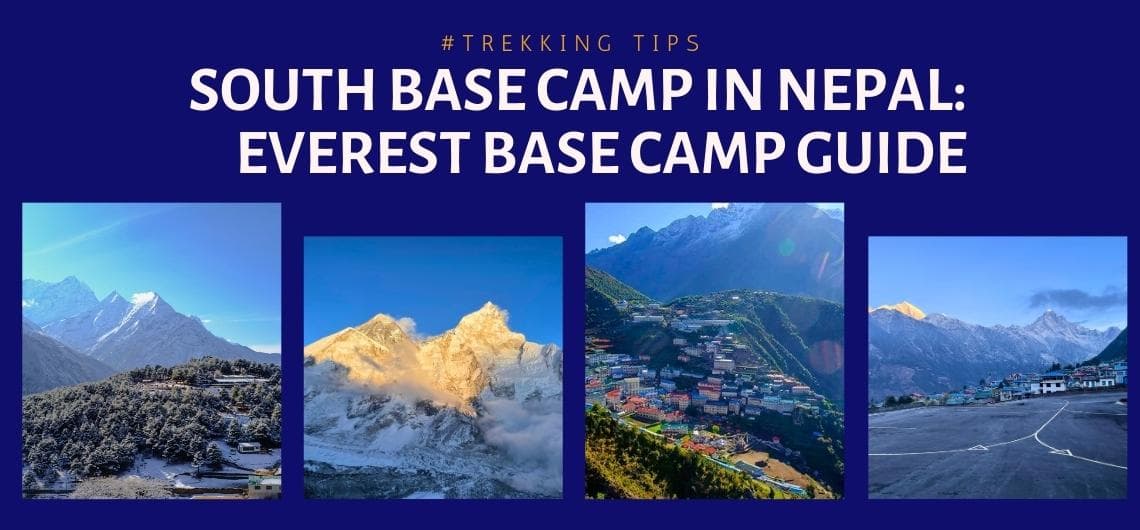
There are hardly any places found on Earth that have the same name in different countries. The Everest Base Camp is an example. It’s in both Tibet and Nepal. The place has a lot of history and adventure written all over it. Similarly, the Everest South Base Camp in Nepal is full of adventure and
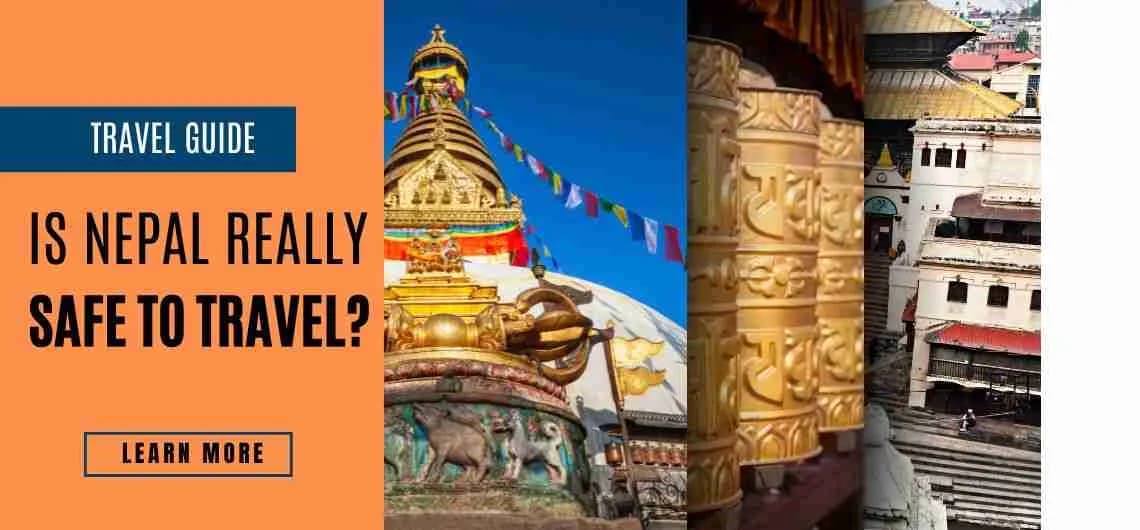
With its breathtaking peaks and lush valleys, Nepal captures the imagination of wanderers globally. But is Nepal safe to travel to, or how safe is it to travel there? This question is common among potential travelers. The good news is, with suitable precautions, Nepal is a safe and enjoyable destination. From avoiding common scams to